
Highlights from My Week with Peter Galbert, Chairmaker
What no one ever tells you, but I should have expected, is that building a chair is a physical endeavor. I developed two blisters on the first day, but I would not trade the experience for the world.
The Physicality of it All
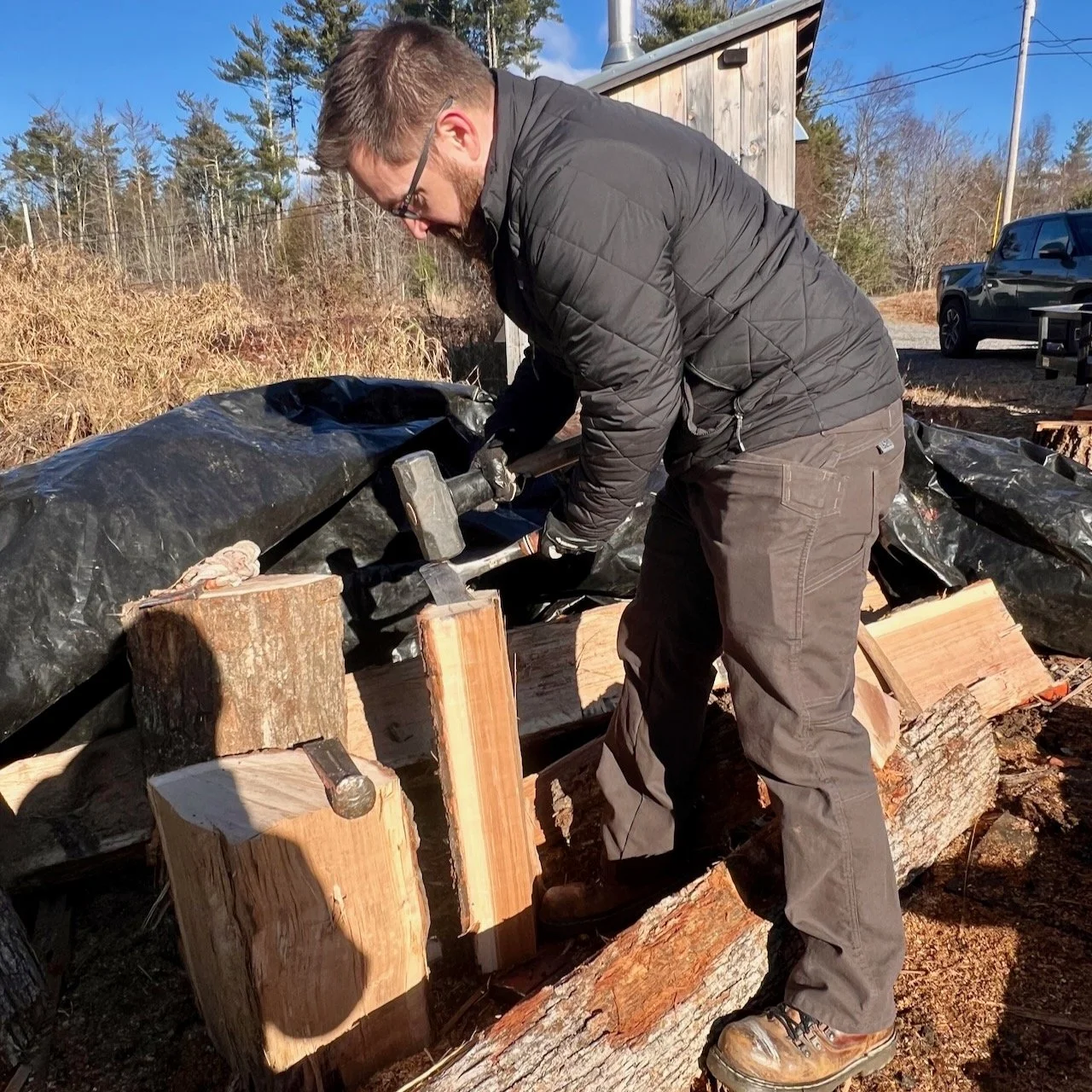
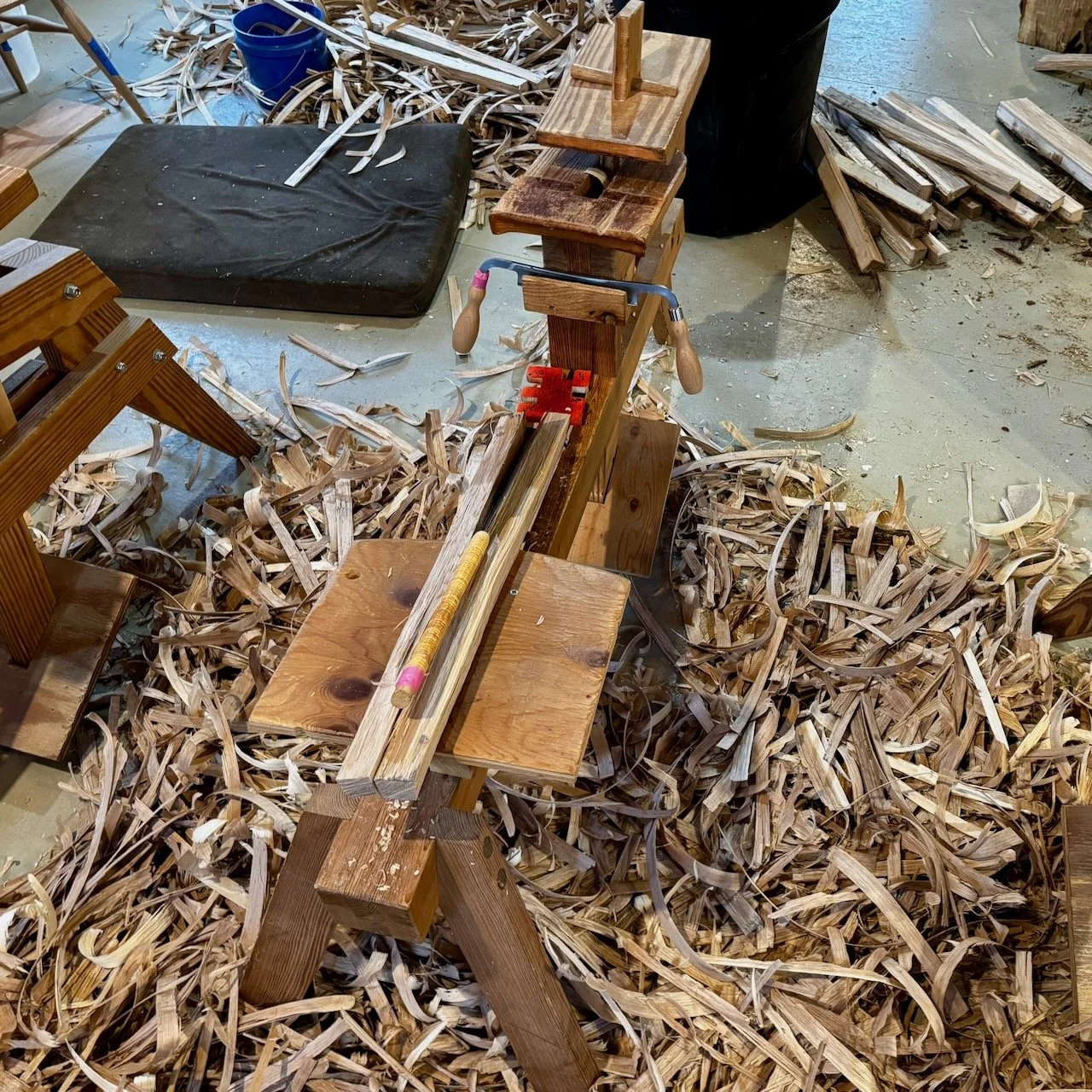
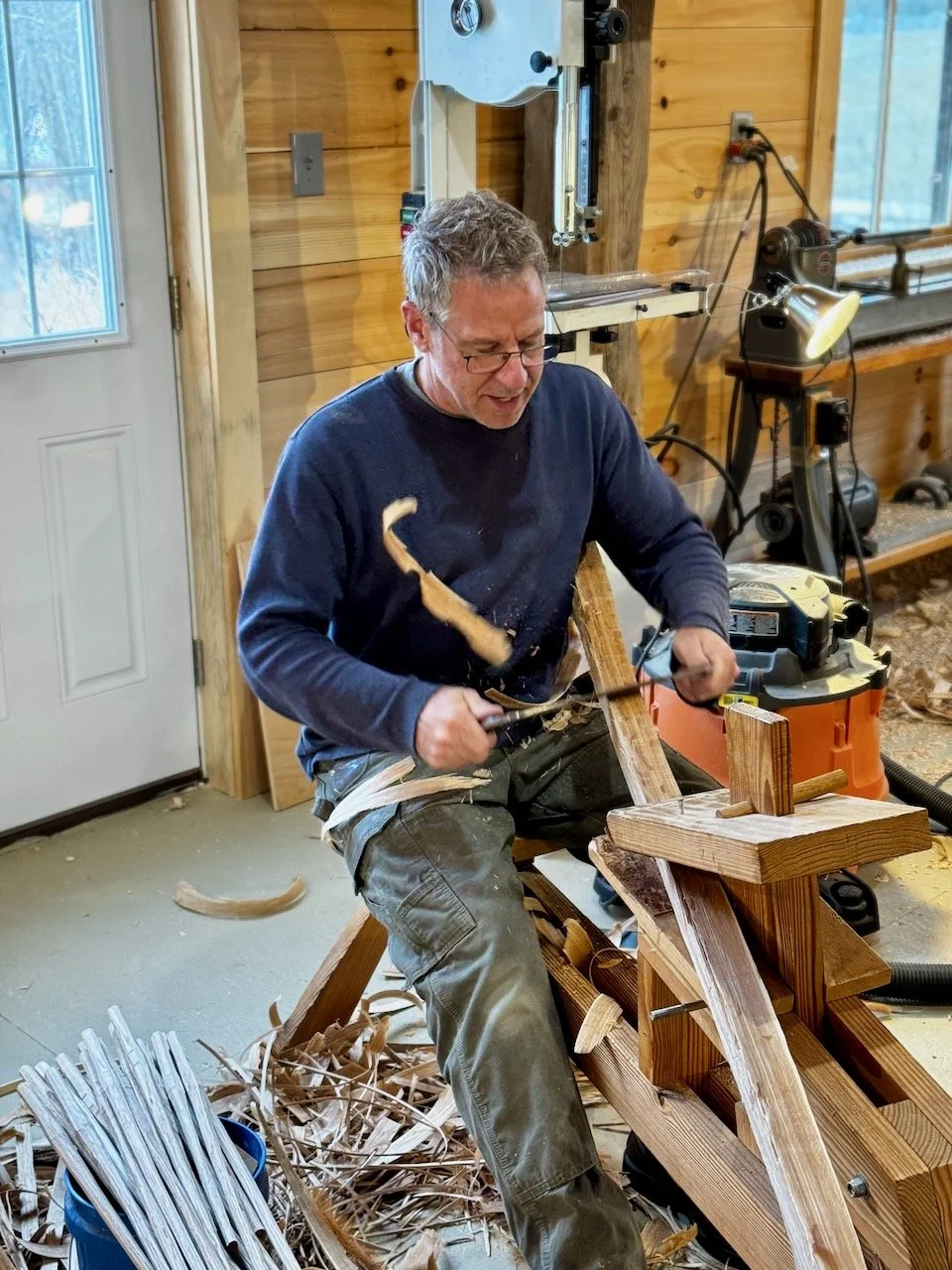
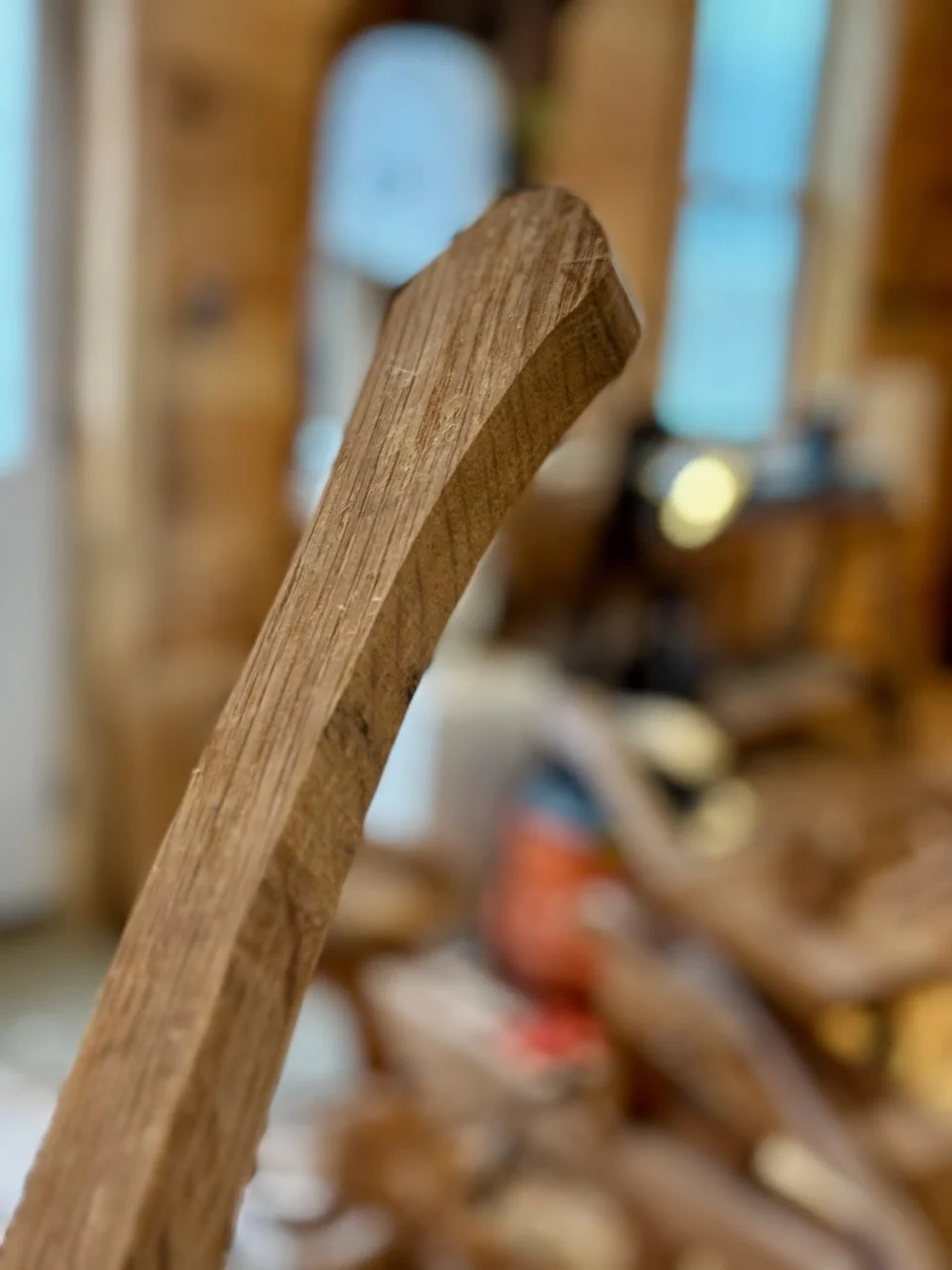
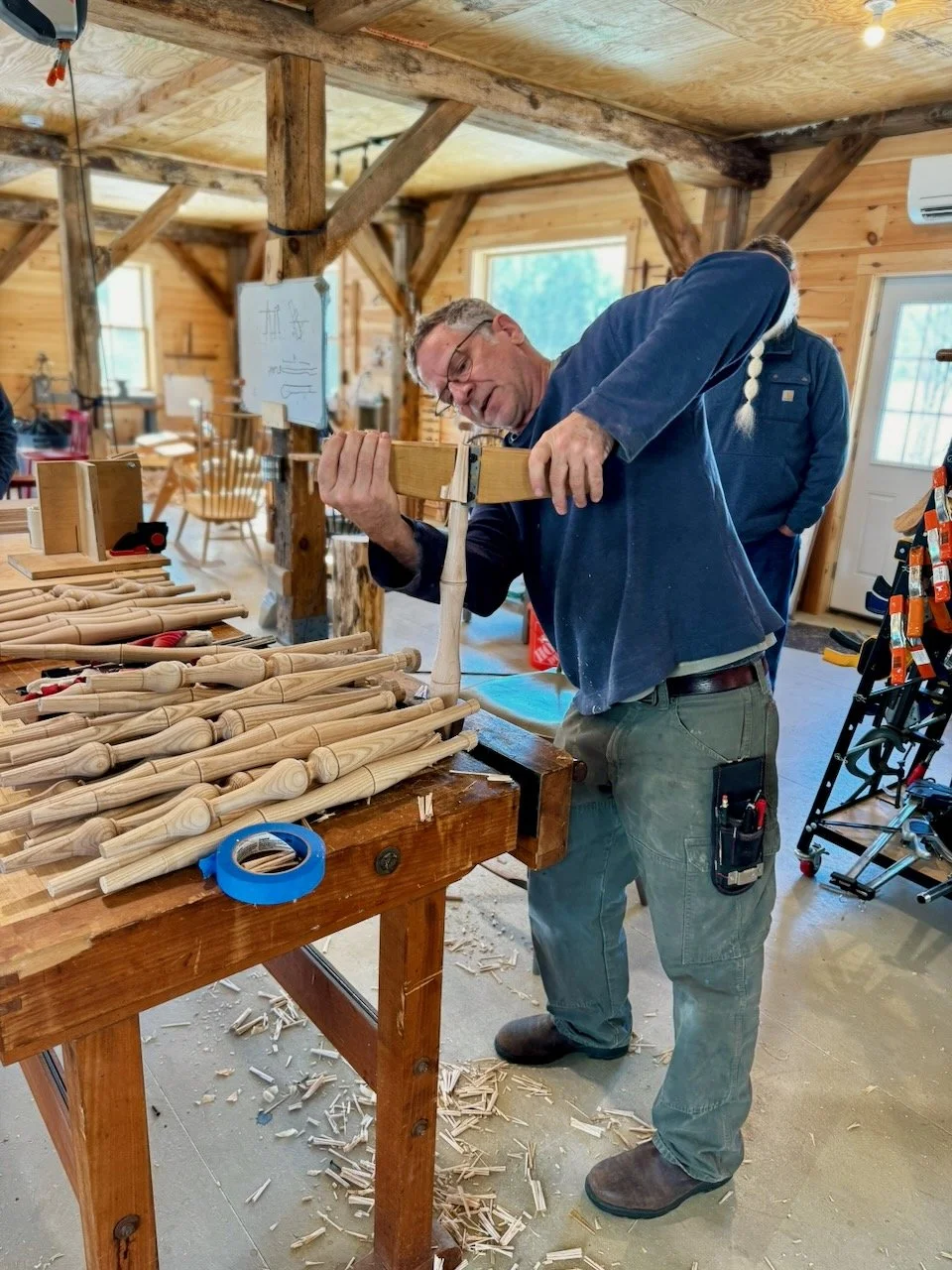
Day 1 saw us jump right into the deep end with riving spindles from logs and shaving, shaving, shaving them on the shave horse with our draw knife. At the end of the day, the pile of shavings around our respective shave horses was enough to start a small business selling fire starters. After a grueling day 1, day 2 was more of the same where we continued working on our spindles and started shaping our arm bows. While the remainder of the week wasn’t as taxing, there was hardly a moment when you weren’t moving. Being a professional chairmaker could easily take care of your cardio requirements for the week!
The Tools
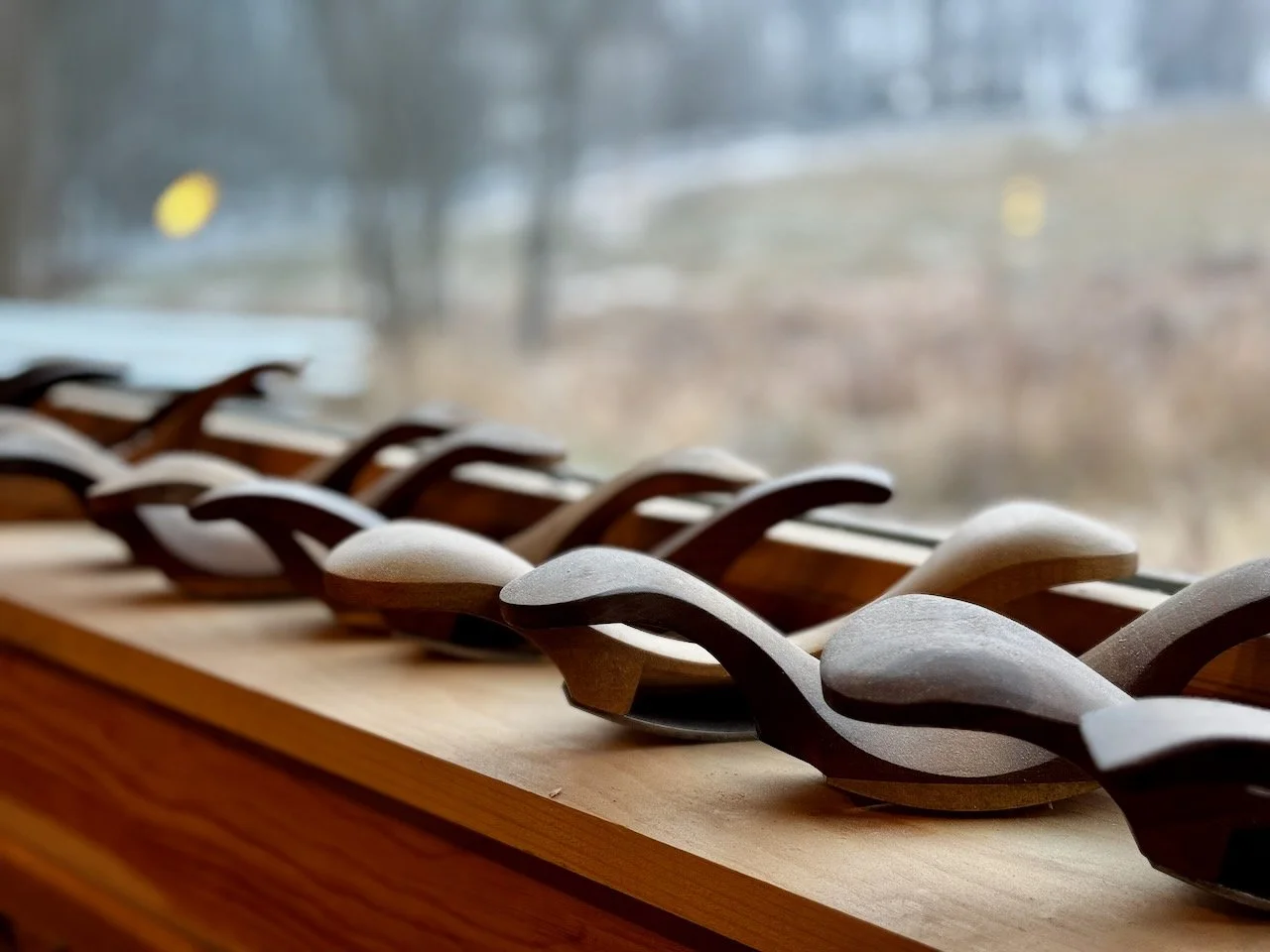
In practice, you could make a chair with an ax, a pocket knife and a curved blade for scooping out your seat…but that wouldn’t be much fun and the results would likely be left wanting. The most effective, and pleasurable, route is to invest in some specialty chairmaking tools. During our class we used several tools including a draw knife, spoke shaves, travisher, curved card scrapers, tapered reamers, and tapered tenon cutters. Pete has worked with several talented tool makers to develop his own version of several of these tools, including the T2 Travisher, which is just an awesome tool to behold and use.
Other tools that are commonly used in chairmaking, but which we didn’t work with during our class, were an adze and an in-shave. The effectiveness of the T2 travisher allowed us to skip those tools entirely while shaping our seats.
Gettin’ Jiggy With It
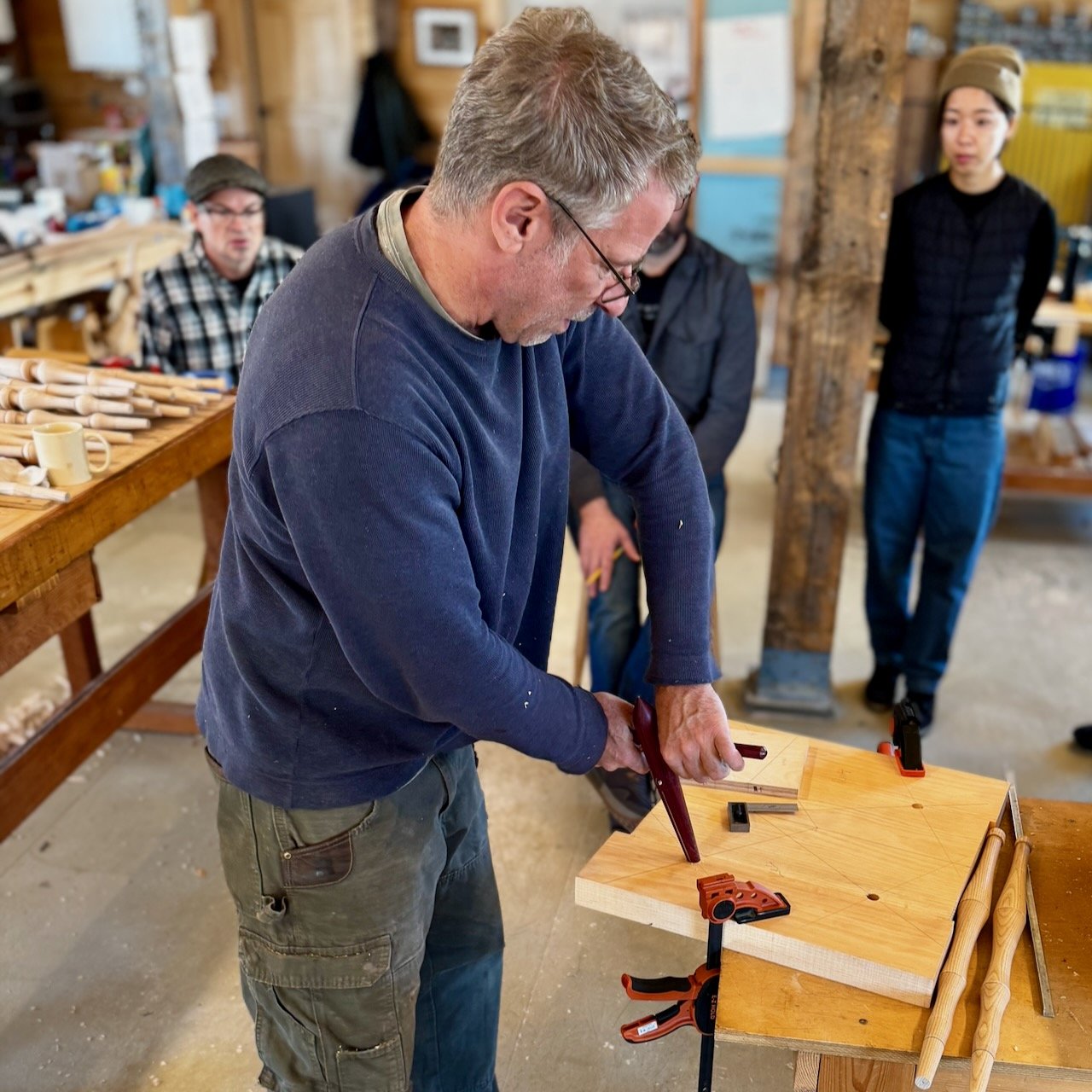
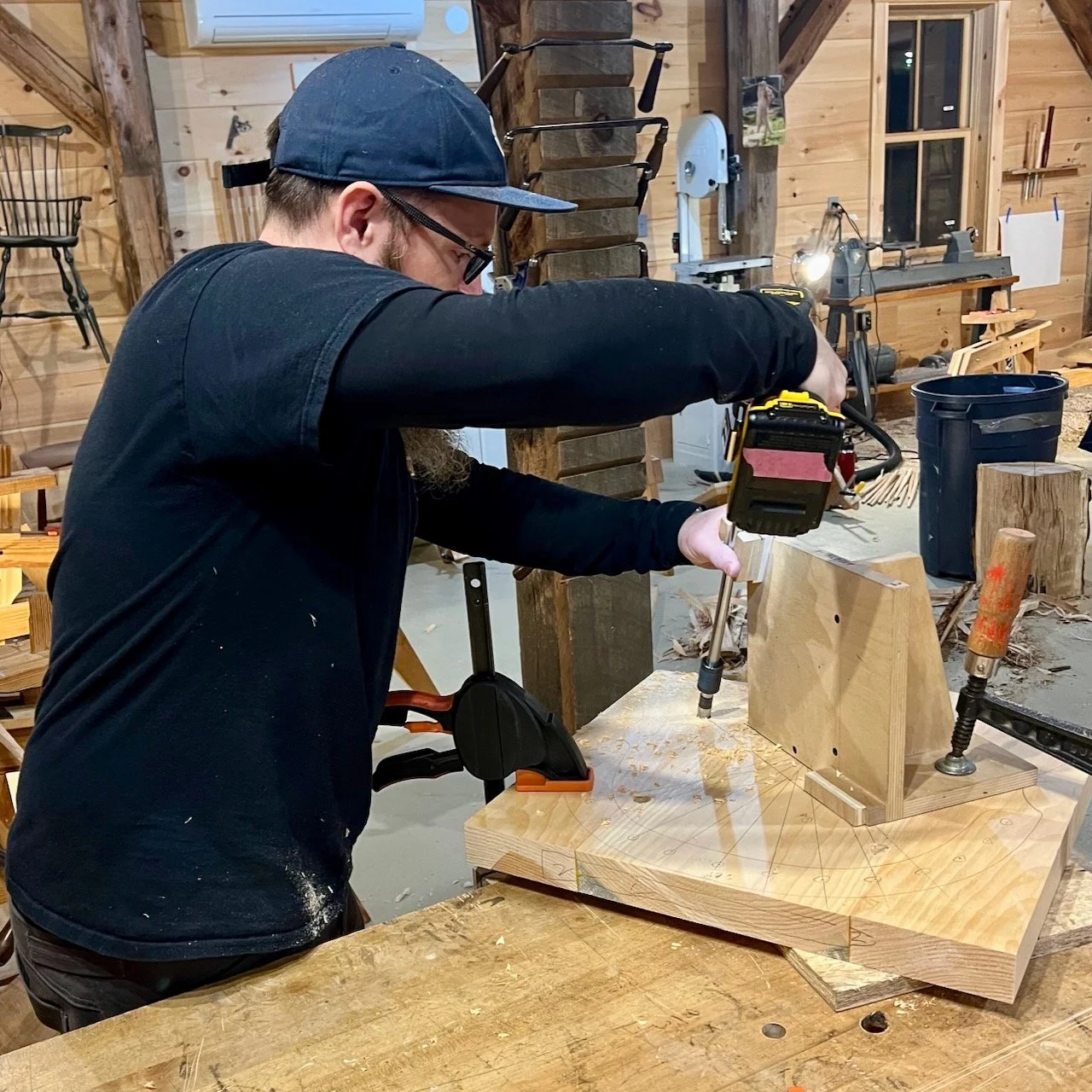
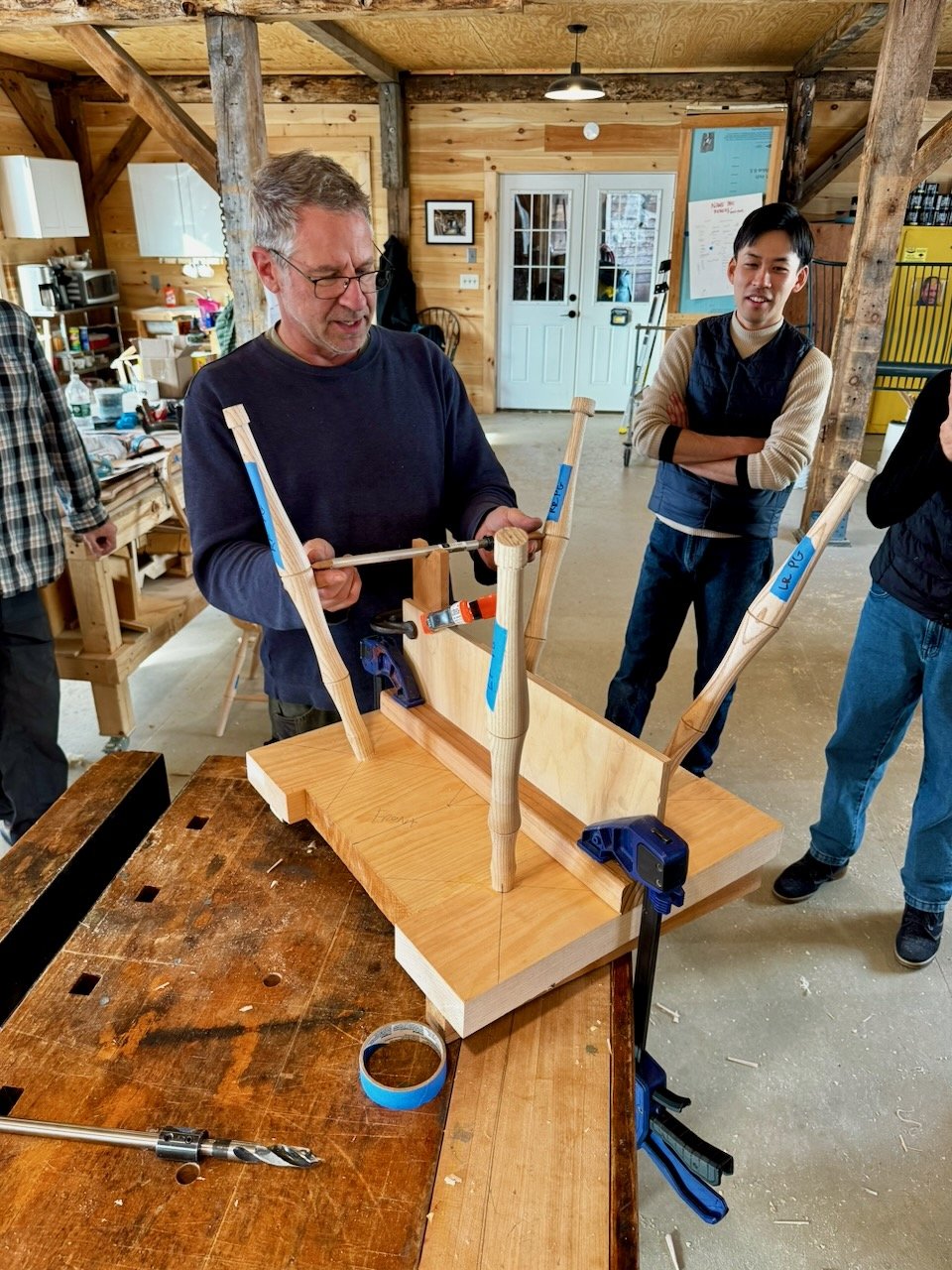
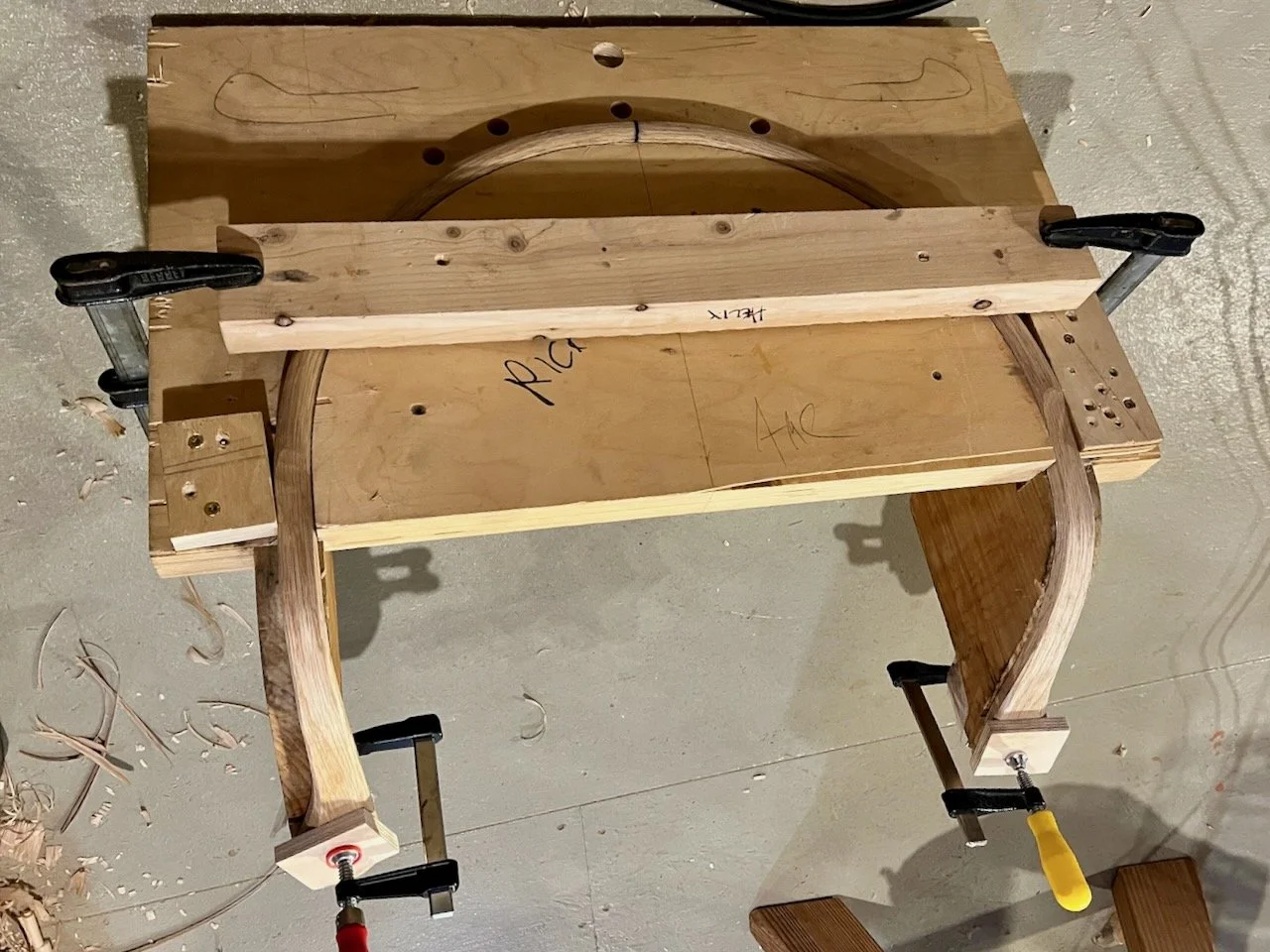
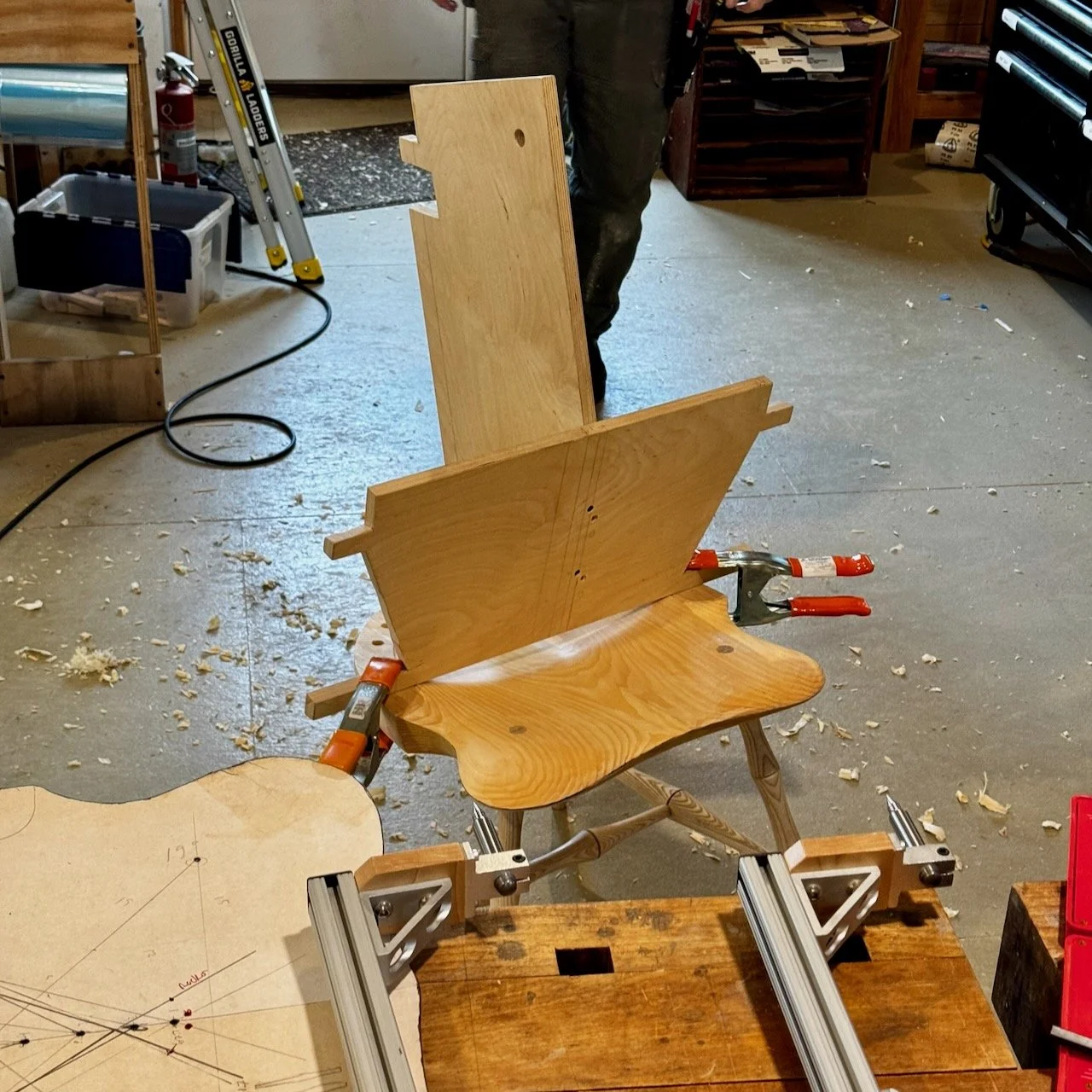
Like many other disciplines in woodworking, chairmaking is no exception when it comes to using jigs and fixtures to make creation and assembly of your chair easier. My personal favorite being the fixture we used when drilling the mortises in our arm bows, so much less stress! Pete’s inventiveness is evident in the jigs we used throughout the process. Sometimes a couple of pieces of plywood are all it takes to make the job at hand that much easier!
People, Place and Pets
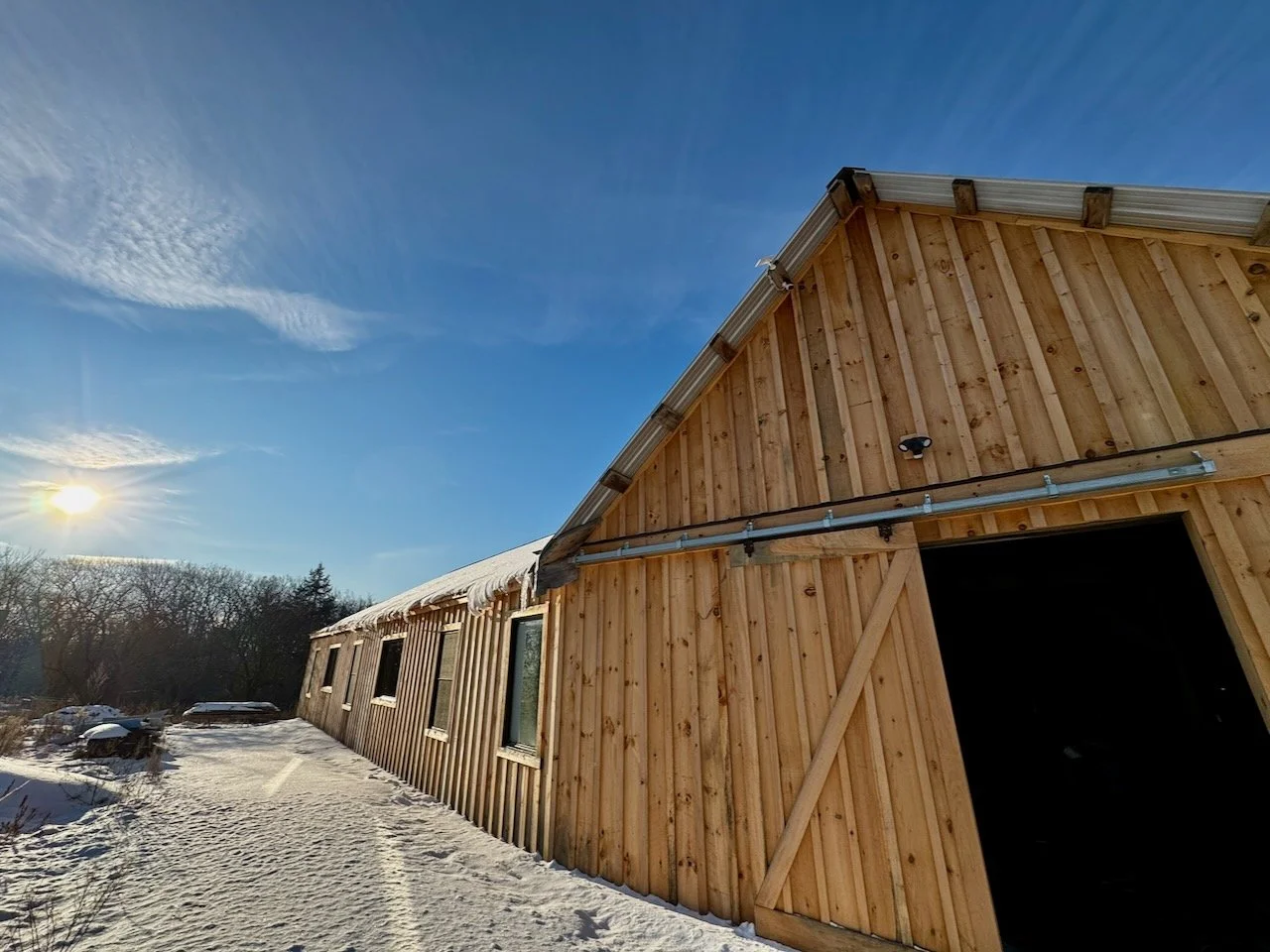
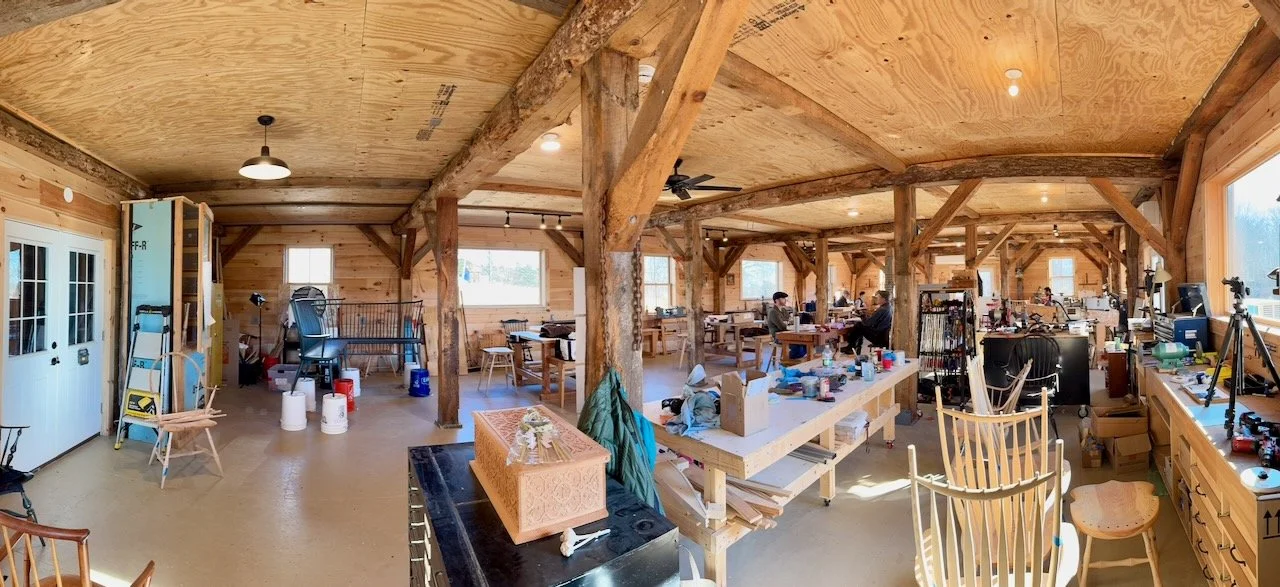
While yes, making a chair is a good deal of work, there’s much to be said about spending a week with like minded folks with nothing to worry about other than making a chair. Add to that the serene setting of a converted 19th century barn in Maine and you’ve got a winning combination for a fantastic woodworking vacation. We had folks from all over - including a couple from Japan who are opening their own woodworking school.
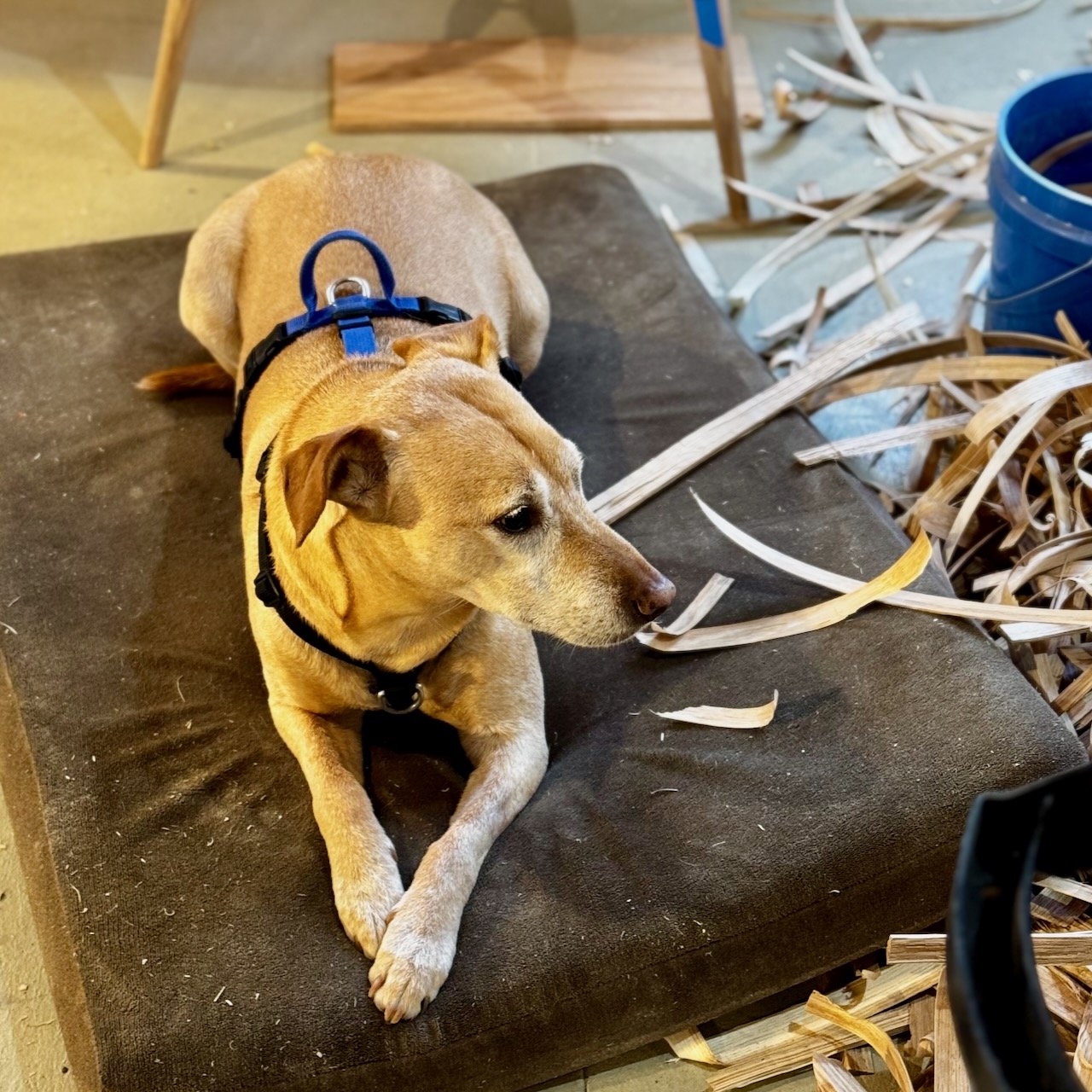
And special mention goes to Georgia, shop dog extraordinaire.

Thank You
A massive thank you for the kindness, hospitality and knowledge shared by Pete and Georgia. To my classmates who made the class all the more fun. And a special thanks to Joel Paul for bringing the vibes!
Additional thanks goes to the Northeastern Woodworkers Association who helped make this experience possible through their Fiske Fund. Thank you!
Find out more about Peter Galbert and his classes at https://www.petergalbert.com.
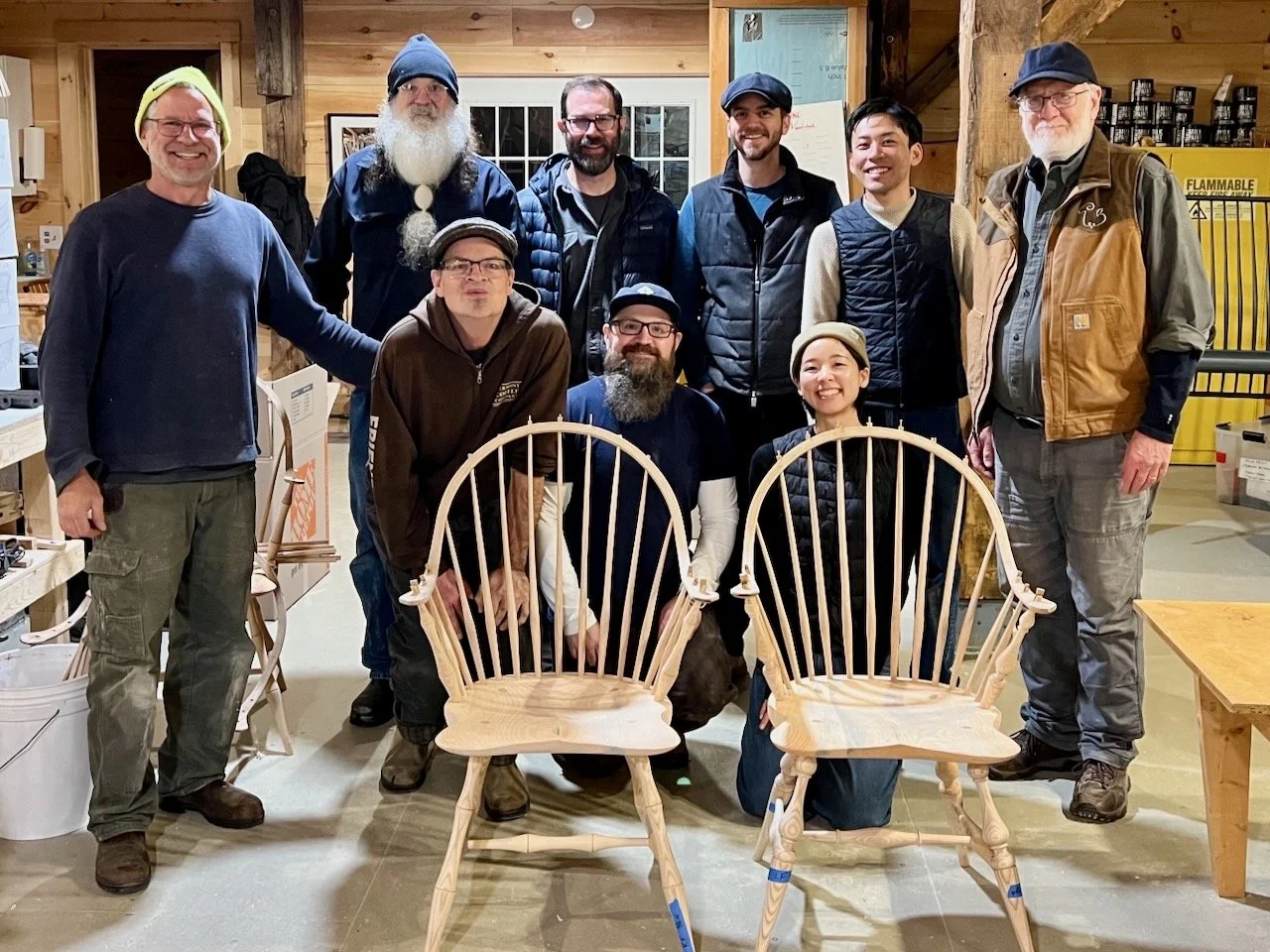
Class photo